

The Median Is Not Your Ceiling: How to Read NYC’s Design Salaries
Every winter, the big firms roll out a salary guide. It lands like a press release, gets quoted once, and then sits untouched until the following December. We do it differently: we rebuild ours every quarter, because a benchmark that's twelve months stale isn't a benchmark — it's a rumor.
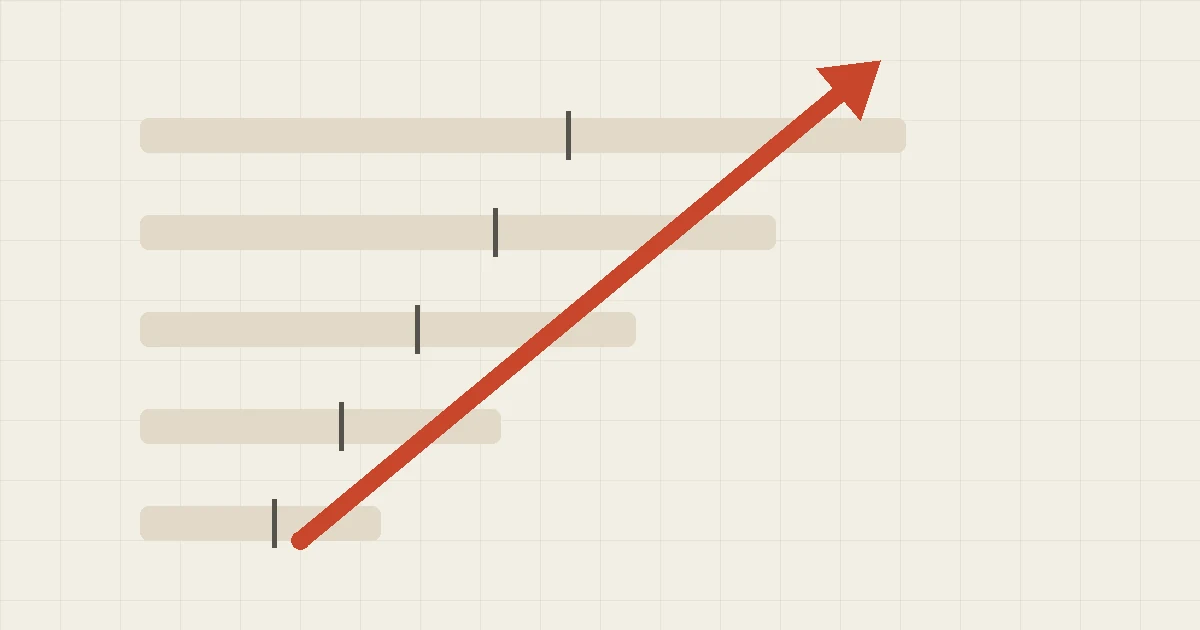
But cadence is the small story. The bigger one is what you do with the number once you have it. Most salary guides hand you a median and let you anchor to it. Anchoring to the median is the single most expensive thing you can do with a salary guide. Here's how to read ours — and why the middle of the range describes where careers cluster, not where yours has to land.
What the guide actually is
The CFA Salary Guide covers six disciplines across the New York market: Architecture, Interior Design, Corporate & Commercial Interiors, Facilities, CAD/BIM, and 3D Modeling & Visualization. Within those we break out roughly thirty compensation tiers — each with a low, median, and high band for NYC.
Two things make it worth trusting. First, the data is aggregated from public, independent sources — salary.com, Glassdoor, Indeed, ZipRecruiter, Built In NYC and others — not from our own placements. We're a staffing firm; if we quoted our own deals back to you as "the market," you'd be right to discount it. Second, it refreshes on a quarterly schedule, automatically, with validation gates before anything publishes. The guide you read in June is not the guide you read in March.
How to read your number
Find your discipline, then your tier. Now look at the spread — the distance between the low and high band. That gap is the real story. In most tiers it's wide enough to fit two very different careers: same title, same years, very different pay.
Before you decide which end you belong at, account for the one factor that moves every number on the page: firm size. A senior designer at a 20-person studio and a senior designer at a 400-person practice can hold the same title and live in different pay universes. The guide gives you the market; firm size tells you which slice of it you're negotiating inside.
Why the median is descriptive, not prescriptive
A median is just the middle of a list. It tells you where most people sit. It tells you nothing about why some people sit well above it — and that "why" is the only part worth your attention.
What separates the median from the high band is rarely raw years. It's range. Depth and variety of senior-level exposure — more project types, more phases, more rooms where the hard calls get made. Two architects can both have ten years in. The one who's run schematic-through-CA on six different building types is not competing for the same offer as the one who spent ten years on a single wing of a single hospital.
The median is where careers cluster when nothing accelerates them. It isn't your ceiling. It's the gravity you're trying to escape.
The fastest way to widen your range
Here's where what we do for a living becomes relevant — so take it for exactly what it is. The most direct way to accumulate varied senior experience is not to wait for one full-time seat to hand it to you, slowly. It's project and project-to-permanent work: moving through different firms, project types, and teams in the time it would take to earn a single promotion in a single chair.
Every engagement adds a building type, a software environment, a client dynamic, a phase you hadn't owned before. You re-enter the full-time market with a portfolio that reads like someone several years more senior — and you negotiate against the high band instead of the median, because you can now do the things the high band is paying for. That's the accelerated path: not more hours. More range.
Read it, then use it
Pull up the Salary Guide, find your tier, and note two numbers: where you are now, and the top of your band. The distance between them isn't a fantasy. It's a plan. If you want to talk through how to close it — which project types would stretch your range fastest, where the demand is this quarter — that's the conversation we're built for.
Frequently asked questions
How often is the salary guide updated?
Every quarter, automatically, with validation checks before anything goes live. Most published guides refresh once a year.
Where does the data come from?
Public, independent aggregators such as salary.com, Glassdoor, Indeed, ZipRecruiter and Built In NYC, not from CFA’s own placements. We keep our deal data out of it on purpose, so the numbers stay neutral.
Why is it New York only?
It’s the market we know cold. Blending in other metros would widen the bands until they stopped meaning anything for an NYC reader.
Does firm size really change pay that much?
Often, yes. The same title at a 20-person studio versus a 400-person practice can sit in noticeably different bands, which is why we flag firm size as the first adjustment to make after you find your tier.
Is project work actually a path to higher pay, or just freelancing?
The difference is what it builds. Project and project-to-permanent work accumulates varied senior-level experience faster than a single seat does, and varied senior experience is exactly what the high band pays for.
How is this different from just checking Glassdoor myself?
We aggregate several sources into NYC-specific tiers and refresh them quarterly, so you’re reading a maintained benchmark instead of triangulating raw, mixed-metro data point by point.